Virtual Assistant vs. Software vs. Employee: An Oregon Small Business Guide

Oct 13, 2026

Handing admin work to a virtual assistant feels like a staffing decision, but in Oregon it is also a legal one. A person you call a “virtual assistant” or a contractor can still be your employee in the eyes of the state, and the label on the contract does not decide it.

This guide helps small business owners sort back-office tasks, compare a virtual assistant with software or an employee, and understand the classification tests that apply in Oregon. It is general information, not legal advice; for a specific worker, check the state’s own resources linked below.

In short: send rule-based tasks to software first, keep anything involving money or sensitive access close to you, and let Oregon’s classification tests, not the job title, decide whether a helper is a contractor or an employee. This guide does not quote virtual assistant rates, because this research found no neutral source for them.

Key Takeaways

  • Under Oregon’s guidance, a contract that says “independent contractor,” a Form 1099 instead of a W-2, or an LLC the worker formed does not by itself settle whether they are a contractor.
  • At least three different tests can apply to one worker in Oregon, and passing one does not clear the others.
  • In Intuit’s survey and QuickBooks data, 77% of U.S. businesses used AI regularly as of January 2026, with adoption highest in marketing, admin, and customer service, so software and AI are real alternatives to a virtual assistant for some tasks.
  • Give any outside helper access only to what the job needs, and only for as long as it is needed.

Sort Your Back-Office Tasks First

Start with the work, not the worker. List the recurring tasks that pull you away from customers, then ask what each one needs: judgment, access to sensitive systems, a fixed process, or a human relationship.

The table below is the author’s judgment, not research data. Use it as a starting point for your own list.

Task type Often suits Why
Scheduling, reminders, inbox sorting Software or AI, or a virtual assistant Repeatable and rule-based
Data entry, document formatting Virtual assistant or software Low judgment, clear instructions
Customer email and chat replies Virtual assistant, with a script and review Needs a consistent voice and some judgment
Invoicing and bookkeeping support Software first, with oversight Touches financial records and tax reporting
Anything with banking or payroll access You or a trusted employee Highest risk if something goes wrong

If a task is mostly a matter of rules, software may do it without a person. Our guide to choosing business software covers how to evaluate those tools, and our bookkeeping fundamentals explain which financial work should stay close to you.

Small business owner planning schedule and recurring tasks on desk calendar
Audit recurring administrative tasks before delegating: identify rule-based scheduling versus high-trust financial access.

Software and AI as the Alternative

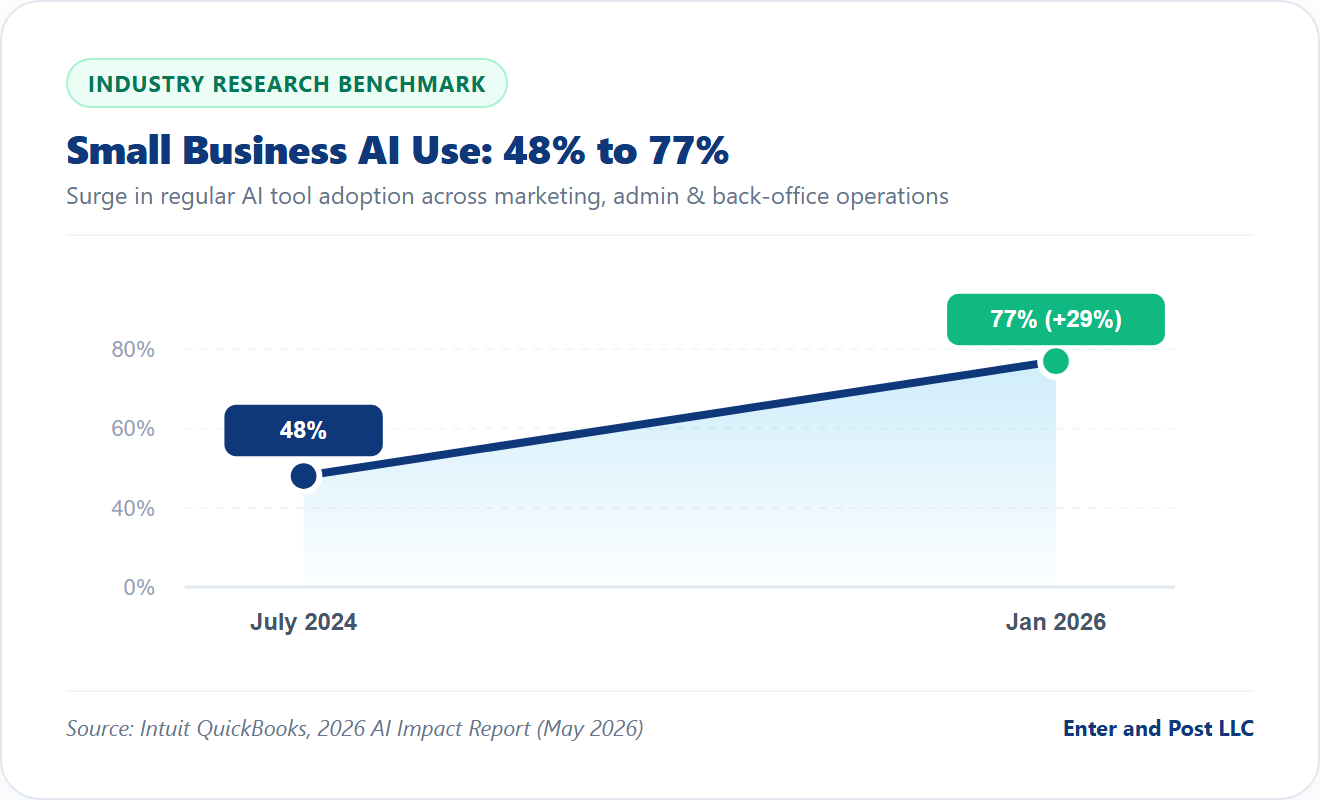
Small Business AI Use: 48% to 77% Chart
Source: Intuit QuickBooks, 2026 AI Impact Report, May 2026.

Intuit reports that 77% of U.S. businesses in its survey and QuickBooks data used AI regularly as of January 2026, up from 48% in July 2024, and that adoption is highest in marketing, admin, and customer service (Intuit QuickBooks, 2026 AI Impact Report). Intuit’s definition of regular use includes free tools, built-in features, and paid subscriptions, so the figure is broader than “businesses that bought an AI assistant.”

The practical point is that some tasks you might hand to a virtual assistant are now handled by tools you may already pay for. Check what your existing software can do before you hire anyone. A person still makes sense where the work needs judgment, relationships, or tolerance for messy instructions.

Is Your Virtual Assistant a Contractor or an Employee?

The IRS looks at three categories of evidence: behavioral control, financial control, and the relationship of the parties, and says “no one factor stands alone.” What matters, in its words, is the right to control the details of how the services are performed (IRS).

Oregon adds its own rules. The Oregon Department of Revenue, the Employment Department, the Workers’ Compensation Division, and two contractor boards require that a worker meet all the criteria of ORS 670.600 to count as an independent contractor, while the Bureau of Labor and Industries (BOLI) uses different criteria (Oregon Independent Contractor guidance). The same page says that a contract label, reporting pay on a Form 1099, or the worker forming an LLC or corporation is not determinative by itself.

Test Who applies it What it looks at
Common-law test IRS Behavioral control, financial control, relationship of the parties
ORS 670.600 Oregon Department of Revenue, Employment Department, Workers’ Compensation Division, and contractor boards Freedom from direction and control over how the work is done, an independently established business, and licensing where required
Economic realities BOLI, for wage-and-hour claims Six factors: integral work, control, permanence, skill and initiative, profit and loss, relative investment

As paraphrased from a site that reproduces the statute, ORS 670.600 asks whether the worker is free from direction and control over the means and manner of the work, customarily engaged in an independently established business, and properly licensed where required (ORS 670.600). Read the official statute before relying on any summary, including this one.

BOLI’s page says its six economic-realities factors are weighed together and that no single factor is determinative (BOLI). By the IRS and BOLI factors above, an assistant who works set hours, follows your detailed instructions, and works only for you looks more like an employee than a business serving several clients; that is this guide’s reading, not a ruling. If that describes your arrangement, our Portland payroll tax guide covers what employing someone triggers.

What Oregon Adds for Contractors You Do Pay

If a worker really is a contractor, a few obligations remain. The Oregon Department of Revenue says Form 1099-NEC is filed through its iWire system, and notes that the IRS raised the reporting threshold for Forms 1099-MISC and 1099-NEC from $600 to $2,000 (Oregon DOR iWire). Track payments to each contractor through the year so you know when you cross it.

Contractors also sit differently under Paid Leave Oregon. The program says independent contractors are not automatically covered but can choose coverage (Paid Leave Oregon). For a contractor based in another state or country, this research found no primary Oregon or IRS source explaining how that changes your obligations, so ask a tax professional rather than assume.

What It Costs

This research found no neutral, citable source for virtual assistant hourly rates. The figures that appear online come mostly from agency and staffing-vendor pages without a disclosed method, so this guide does not repeat them. Get written quotes for your own scope.

For an employee benchmark, the Bureau of Labor Statistics reports median pay for secretaries and administrative assistants of $48,310 a year, or $23.23 an hour, as of May 2025 (BLS). That covers wages only, not employer taxes or benefits, and it is not a virtual assistant rate.

Two Hypothetical Arrangements

These are invented examples to show how the factors play out; they are not legal conclusions about any real worker.

Arrangement A: High Control (Looks Like an Employee)

A Portland bakery owner hires one person to answer customer email from 9 to 1 every weekday, using the bakery’s email account and following a written script. The owner reviews every reply, sets the schedule, and the person works for no one else. On the factors above (control over how and when the work is done, an ongoing relationship, no independent business), this looks closer to an employee, and the contract label alone would not settle it.

Arrangement B: Independent Business (Looks Like a Contractor)

A bookkeeping-support business with several clients agrees to reconcile the bakery’s invoices each month for an agreed fee. It chooses its own hours and tools, supplies its own equipment, markets to other clients, and the bakery specifies only the result. This looks closer to an independent business, though it would still need to meet every criterion of each test that applies. ORS 670.600 has further requirements, and BOLI weighs different factors, so the answer could still differ.

The difference is not the job title. It is who controls the details of the work and whether the worker runs a real business of their own.

When an Employee Is the Better Fit

An employee makes more sense when you need to direct the work closely or set the hours. Control over how and when the work is done is what the classification tests weigh, so trying to fit that kind of arrangement into a contractor label is where the legal risk builds. Ongoing access to sensitive systems is a separate, security-based reason to prefer an employee you can train and supervise.

The cost picture changes too. The BLS wage above is only the starting point, because employing someone adds costs beyond wages. See our payroll tax guide for Portland employers for what an Oregon employer pays and withholds. No source in this research puts a reliable total cost on an employee versus a virtual assistant, so compare written quotes and your own payroll numbers rather than a headline figure.

Protecting Your Systems and Customer Data

Any helper with access to your email, accounts, or customer records is a vendor risk. The Federal Trade Commission says vendors may have access to sensitive information about your business or customers, and advises: “Limit access to a need-to-know basis, and only for the time the vendor needs to do the job.” It also says: “Don’t just take their word for it” (FTC).

For a virtual assistant, that means separate logins rather than shared passwords, access limited to the tools the task needs, and removing access the day the engagement ends.

A Simple Handoff Checklist

Whoever does the work, a written handoff reduces mistakes and makes it easier to see how much control you are exercising:

  1. Write each task as an outcome. “Inbox sorted by 10 a.m.” is clearer than “help with email.”
  2. List the tools and the access each one needs, and nothing more.
  3. Define what needs your approval, such as refunds, anything involving money, or messages to key customers.
  4. Set a review rhythm, for example a weekly check of a sample of the work.
  5. Decide how the engagement ends, including removing access and collecting any files.

If writing the instructions reveals that you want to dictate hours, methods, and tools in detail, that is a signal to revisit the classification question before you start.

Frequently Asked Questions

Is a virtual assistant an employee or a contractor?

It depends on the facts, not the label. Oregon’s guidance says a contract label, a Form 1099, or an LLC is not determinative by itself, and more than one test can apply. An assistant you direct closely and who works only for you is more likely to be treated as an employee.

Do I need to file a 1099 for a virtual assistant?

If a worker is a contractor and you pay them $2,000 or more in a year, Form 1099-NEC reporting applies under the current threshold, and the Oregon Department of Revenue says it is filed through iWire. Confirm the current rules with the IRS and the Oregon Department of Revenue.

Can software or AI replace a virtual assistant?

For rule-based work like scheduling and inbox sorting, often yes. Intuit reports adoption is highest in admin and customer service. Tasks that need judgment or relationships still suit a person.

How should I give a virtual assistant access to my systems?

Use separate logins, grant only the access the task needs, and remove it when the work ends, in line with the FTC’s need-to-know guidance.

How to Decide

List your tasks, send the rule-based ones to software first, and keep anything involving money or sensitive access close to you. If you still want a person, decide up front whether the role is a true independent business or an employee-style arrangement, because Oregon’s tests turn on the facts, not the title. When in doubt, use the state’s contractor resources or a professional before the first payment.

Customer Support Virtual Assistant Services

Jul 31, 2026

Customer Support Virtual Assistant: Improve Customer Experience with Reliable Remote Support

Deliver Better Customer Service with Professional Virtual Assistance

Customer expectations continue to rise as businesses compete in a fast-moving digital marketplace. Customers want quick responses, helpful communication, and reliable support whenever they need assistance. Managing customer inquiries efficiently can become challenging, especially for growing businesses with limited internal resources.

A customer support virtual assistant helps businesses handle customer communication, resolve basic issues, manage inquiries, and maintain better relationships with clients. By outsourcing customer support tasks, companies can improve response times, reduce workload, and provide a more consistent customer experience.

Enter and Post LLC, a Portland, Oregon-based BPO, business development, and IT services provider, offers professional customer support solutions designed to help businesses improve service quality and operational efficiency. Our remote support teams help companies manage customer interactions while allowing internal teams to focus on business growth.

What Is a Customer Support Virtual Assistant?

Understanding Customer Support Virtual Assistant Services

A customer support virtual assistant is a remote professional who helps businesses manage customer communication and support activities. These specialists work through digital channels such as email, chat, phone systems, and online platforms to assist customers and maintain service quality.

Unlike traditional customer service employees, virtual assistants provide flexible support that can be adjusted according to business requirements.

Common responsibilities include:

●Answering customer inquiries

●Managing emails and messages

●Providing product or service information

●Handling customer follow-ups

●Updating customer records

●Scheduling appointments

●Managing support tickets

●Collecting customer feedback

These services help businesses maintain strong customer relationships without increasing internal operational pressure.

Why Businesses Need Virtual Customer Support

Customer service directly affects brand reputation and customer loyalty. Slow responses or poor communication can lead to dissatisfied customers and lost business opportunities.

A professional virtual assistant provides additional support that helps businesses respond faster and maintain consistent communication. This is especially valuable for companies experiencing growth, seasonal demand, or increasing customer inquiries.

Key Responsibilities of a Customer Support Virtual Assistant

Managing Customer Inquiries and Communication

Customers often contact businesses through multiple channels, including email, websites, social media, and messaging platforms. Managing these conversations requires organization and timely responses.

A customer support virtual assistant can handle:

●Customer questions

●Service inquiries

●Order-related communication

●General information requests

●Follow-up messages

By managing daily communication, virtual assistants help businesses create smoother customer interactions.

Email and Chat Support Management

Email and live chat are important customer service channels. However, responding to every message quickly can be difficult for busy teams.

Virtual assistants help manage:

●Customer emails

●Chat conversations

●Support requests

●Response tracking

●Communication records

Professional support ensures customers receive timely assistance and accurate information.

Customer Relationship Management Support

Maintaining organized customer information helps businesses provide better service. Virtual assistants can update records, organize customer details, and support CRM processes.

CRM-related assistance may include:

●Updating customer profiles

●Tracking customer interactions

●Managing follow-up tasks

●Organizing support history

Better customer data management allows businesses to deliver more personalized experiences.

Handling Support Tickets and Issue Tracking

Many businesses use ticketing systems to manage customer problems. Keeping tickets organized helps ensure issues are resolved efficiently.

A virtual customer support assistant can assist with:

●Ticket creation

●Status updates

●Customer notifications

●Issue tracking

●Resolution follow-ups

This creates a more structured customer support workflow.

Benefits of Hiring a Customer Support Virtual Assistant

Improve Customer Response Times

Customers value quick responses. Delayed communication can negatively impact satisfaction and brand perception.

A dedicated virtual support assistant helps businesses manage customer requests faster, ensuring customers receive timely assistance.

Improved response times can strengthen customer relationships and increase trust.

Reduce Business Operating Costs

Building an internal customer support team requires salaries, training, technology, and management resources. Outsourcing provides businesses with professional support without the same level of investment.

Companies can access skilled customer service professionals while maintaining better cost control.

Provide Support Beyond Regular Business Hours

Many customers expect assistance at convenient times. Virtual assistants provide flexibility that allows businesses to extend support availability.

This helps companies serve customers across different schedules and time zones.

Allow Teams to Focus on Growth

Customer support requires consistent attention. Managing every inquiry internally can distract teams from important business activities.

By outsourcing support tasks, companies can focus more on sales, product development, and strategic growth.

How Enter and Post LLC Supports Customer Service Operations

Customized Customer Support Solutions

Every business has different customer service requirements. Some companies need email support, while others require complete customer communication management.

Enter and Post LLC provides customized customer support solutions based on business needs, customer expectations, and operational goals.

Our team helps businesses create efficient support systems that improve customer satisfaction.

Combining BPO Expertise with Technology

Modern customer support depends on efficient processes and reliable technology. Businesses need organized systems to manage conversations, customer data, and support workflows.

Enter and Post LLC combines BPO experience with IT capabilities to deliver effective customer support solutions. This approach helps businesses improve service quality while maintaining operational efficiency.

Choosing the Right Customer Support Virtual Assistant Provider

Factors Businesses Should Consider

Selecting the right customer support partner is important because customer interactions directly impact brand reputation.

Businesses should evaluate providers based on:

●Customer service experience

●Communication skills

●Technology knowledge

●Data security practices

●Service flexibility

●Reporting capabilities

A reliable provider should understand your customers and represent your brand professionally.

Why Professional Customer Support Creates Long-Term Value

Customer support is not only about solving problems. It is about building trust and creating positive customer experiences.

A skilled virtual assistant helps businesses maintain consistent communication, improve customer satisfaction, and strengthen long-term relationships.

Is Hiring a Customer Support Virtual Assistant Worth It?

For growing businesses, hiring a customer support virtual assistant can be a practical way to improve service quality while reducing operational challenges. Companies can access professional customer support skills without the expense of building a larger internal department.

Startups benefit from flexible support, while established businesses can improve efficiency by managing higher customer volumes.

With the right virtual assistant partner, businesses can provide better customer experiences, respond faster, and focus on sustainable growth.

Improve Customer Experience with Enter and Post LLC

Providing excellent customer support is essential for building trust and long-term business success. A professional customer support virtual assistant helps businesses manage customer communication, improve response times, and deliver better service experiences.

Enter and Post LLC provides reliable BPO, business development, IT, and customer support solutions designed to help businesses operate more efficiently. Our team delivers customized remote assistance that matches your workflow and customer service goals.

Whether you need help managing inquiries, handling support tickets, or improving customer communication, Enter and Post LLC can provide the support your business needs.

Contact Enter and Post LLC today to discover how our customer support virtual assistant services can help your business improve customer satisfaction, reduce workload, and grow with confidence.

How a Virtual Assistant Role Became One of the Most Popular “Side Hustles” Today

May 16, 2025

In today’s fast-moving digital world, “side hustles” have gone from trendy buzzwords to essential income streams for millions. Whether you’re looking to pad your paycheck, explore a passion project, or transition to working for yourself, “side hustles” are empowering people to take control of their time and money.

One of the fastest-growing and most accessible “side hustles” to emerge is the role of a Virtual Assistant (VA).

Whether you’re a stay-at-home parent, student, freelancer, or full-time employee, becoming a Virtual Assistant could be the flexible, remote-friendly opportunity you’ve been searching for.

What Is a Virtual Assistant?

A Virtual Assistant is a remote professional who provides support services to businesses, entrepreneurs, and busy professionals. The tasks can vary widely—from managing emails, calendars, and customer service to handling social media, graphic design, or even project management.

VAs often work from home (or anywhere with Wi-Fi), making it one of the most flexible “side hustles” available today.

Why Becoming a Virtual Assistant Is a Top Choice Among “Side Hustles”

1. Low Startup Costs

Starting as a Virtual Assistant doesn’t require a huge investment. Most people already have what they need: a computer, internet connection, and basic software. That makes it one of the most affordable “side hustles” to dive into.

2. Flexible Hours

VAs typically set their own hours, making it ideal for anyone balancing a full-time job, school, or family life. It’s the perfect plug-and-play addition to your routine.

3. Wide Variety of Work

From tech support to content creation, the VA world is full of niches. This allows you to focus on tasks you enjoy and are good at, turning your natural skills into income.

4. Consistent Demand

As more businesses go digital, the need for remote support is growing. Many entrepreneurs can’t justify hiring full-time staff—but they do need help. That’s where VAs come in.

5. Growth Potential

What starts as a part-time gig can easily grow into a full-time career. Many VAs eventually scale up, build teams, or transition into online business managers and consultants.

How to Start Your Journey as a Virtual Assistant

Ready to launch one of the most in-demand “side hustles” out there? Here’s how to get started:

  • Identify Your Skills: Think about your strengths. Are you great with organization? A social media whiz? Love writing? There’s a VA role that matches.

  • Set Up Your Tools: A quiet workspace, a reliable computer, and basic tools like Google Workspace or Canva will get you started.

  • Build Your Online Presence: A professional LinkedIn profile or a simple website can help you stand out.

  • Join Freelance Platforms: Sign up for sites like Upwork, Fiverr, or Freelancer to find your first clients.

  • Network Like a Pro: Join VA communities, attend virtual meetups, and get active in online forums where potential clients hang out.

Final Thoughts

If you’re looking for “side hustles“ that are flexible, scalable, and in high demand, becoming a Virtual Assistant is one of the smartest moves you can make. It’s a powerful way to earn income while building real-world skills and meaningful professional relationships.

Whether you want to earn a little extra each month or build a full-time business, this VA path offers the freedom and potential you’ve been looking for.

Exploring Virtual Assistant Jobs: A Flexible Remote Opportunity

May 13, 2025

In today’s fast-paced world, many businesses are opting for virtual assistants to help streamline their operations. With the rise of remote work and digital tools, virtual assistant jobs have become a sought-after career option, especially for those looking to work from home. One of the most attractive aspects of virtual assistant roles is the availability of “virtual assistant jobs remote part time,” providing flexibility and an ideal work-life balance.

What is a Virtual Assistant?

A virtual assistant (VA) is a professional who provides administrative, technical, or creative assistance to clients remotely. These tasks can range from managing emails and scheduling appointments to social media management, bookkeeping, customer service, and much more. The beauty of being a virtual assistant lies in the ability to work from anywhere—whether you’re at home, traveling, or in a café, as long as you have a reliable internet connection.

Why Virtual Assistant Jobs Are Becoming Popular

There are several reasons why virtual assistant jobs, particularly “virtual assistant jobs remote part time,” are becoming increasingly popular:

1.Flexibility: Remote part-time virtual assistant jobs offer the flexibility to work around your personal schedule. This is especially appealing for parents, students, or anyone looking to supplement their income without committing to a full-time position.

2.Work-Life Balance: Traditional office jobs often come with long hours and daily commutes. Virtual assistant roles allow you to manage your time better, creating a healthier work-life balance.

3.Diverse Opportunities: Virtual assistant jobs can span various industries, from tech and healthcare to marketing and real estate. This diversity means that you can find opportunities that align with your skills and interests.

4.Cost-Effective for Businesses: For businesses, hiring a virtual assistant, particularly part-time, is an economical way to delegate tasks. They don’t have to worry about office space or employee benefits, making it a more cost-effective solution compared to hiring full-time employees.

Skills Required for Virtual Assistant Jobs

To thrive as a virtual assistant, certain skills are essential. These include:

  • Communication Skills: Clear and effective communication is crucial since most of your interactions will be through email, phone calls, or video conferences.

  • Organization: Managing schedules, appointments, and various tasks requires excellent organizational skills.

  • Tech-Savviness: Virtual assistants often use tools like Google Workspace, Zoom, Asana, or Trello to stay on top of tasks. Being comfortable with these tools is a must.

  • Problem-Solving: As a virtual assistant, you’ll need to handle various challenges. Being proactive and resourceful in finding solutions will make you an asset to your clients.

How to Find “Virtual Assistant Jobs Remote Part Time”

If you’re looking for virtual assistant jobs, especially “virtual assistant jobs remote part time,” there are several places to start:

1.Job Boards: Websites like Indeed, FlexJobs, and We Work Remotely frequently post part-time remote VA opportunities. You can filter your search to find the ideal job that fits your availability.

2.Freelance Platforms: Websites such as Upwork, Freelancer, and Fiverr offer an array of part-time virtual assistant roles. Many employers post short-term projects, making it easier to find work that suits your schedule.

3.Networking: Joining online communities and groups dedicated to virtual assistants, such as LinkedIn or Facebook groups, can help you connect with potential clients or other VAs who might refer you to opportunities.

4.VA Agencies: Many agencies specialize in matching virtual assistants with clients. These agencies can help you find reliable part-time work, though they may charge a commission for their services.

Benefits of Working as a Virtual Assistant

Aside from the flexibility and work-life balance, there are several benefits to pursuing virtual assistant jobs:

  • Independence: You are essentially running your own business, which allows you to make decisions about your work hours and how much you want to take on.

  • Diverse Experience: As a virtual assistant, you’ll work with different clients across various industries. This not only helps expand your skill set but also builds your network.

  • Job Satisfaction: Many virtual assistants report higher levels of job satisfaction due to the flexibility, variety of tasks, and ability to work from home.

Conclusion

Virtual assistant jobs, particularly “virtual assistant jobs remote part time,” are an excellent choice for those looking for flexibility, independence, and an opportunity to work from home. With the right set of skills and a proactive approach, you can build a rewarding career while enjoying a healthier work-life balance. Whether you’re looking for full-time or part-time work, the virtual assistant field offers diverse opportunities to help businesses thrive while allowing you to manage your career on your terms.

What is a Virtual Assistant and How Do I Become One?

Feb 14, 2025

In today’s digital age, businesses and entrepreneurs are increasingly relying on virtual personal assistants to handle administrative and operational tasks. A virtual assistant (VA) is a remote worker who provides professional support services, allowing businesses to focus on core activities while delegating time-consuming tasks.

If you’re looking for a flexible, work-from-home career, becoming a personal assistant virtual could be a great opportunity. In this guide, we’ll cover what a virtual assistant does, how to get started, and the benefits of virtual assistants for businesses.

What is a Virtual Assistant?

A virtual assistant is an independent contractor who provides administrative, technical, or creative assistance remotely. Unlike in-house employees, outsourced virtual assistants work from home or a remote office, using digital tools to communicate with clients.

Common tasks a virtual assistant handles include:
✅ Administrative support (scheduling, email management, data entry)
✅ Customer service (handling inquiries, responding to clients)
✅ Social media management (creating and scheduling posts)
✅ Bookkeeping (tracking expenses, invoicing clients)
✅ Content creation (blog writing, graphic design, video editing)

Benefits of Hiring a Virtual Assistant

Businesses and entrepreneurs hire virtual personal assistants to save time and increase efficiency. Some key advantages include:

🔹 Cost Savings – No need for office space, benefits, or equipment.
🔹 Flexibility – Hire based on workload (hourly, part-time, or full-time).
🔹 Scalability – Easily expand operations without hiring full-time staff.
🔹 Increased Productivity – Focus on core business tasks while delegating routine work.

If you’re a business owner wondering how to hire a virtual assistant, you can find experienced professionals through freelancing platforms like Upwork, Fiverr, or virtual assistant agencies.

How to Become a Virtual Assistant

Interested in starting your career as a personal assistant virtual? Follow these steps:

1. Identify Your Skills & Niche

Decide which services you’ll offer based on your expertise. Some virtual assistants specialize in:
📌 Administrative assistant virtual support
📌 Social media management
📌 Bookkeeping & invoicing
📌 Email and calendar management
📌 Graphic design and content creation

2. Get the Right Tools

To work as a virtual assistant, you’ll need:
🖥️ Reliable computer & high-speed internet
📧 Project management software (Trello, Asana, ClickUp)
📞 Communication tools (Zoom, Slack, Skype)
📑 Bookkeeping software (QuickBooks, FreshBooks, Xero)

3. Create an Online Presence

Potential clients need to find you easily. Set up:
🌍 A professional website or LinkedIn profile
📢 Freelancer accounts (Upwork, Fiverr, Freelancer)
📝 Social media presence (Facebook, Instagram, Twitter, TikTok)

4. Start Networking & Applying for Jobs

Join freelancer networks, Facebook groups, and LinkedIn communities to connect with potential clients. Send personalized pitches highlighting how your outsourced virtual assistant services can help businesses.

Final Thoughts

Becoming a virtual assistant is a rewarding career path with flexibility, high demand, and great earning potential. Whether you’re offering administrative assistant virtual support or specialized services like bookkeeping, social media, or content creation, the opportunities are endless.

If you’re a business owner, now is the best time to explore the benefits of virtual assistants and hire a professional to streamline your operations. 🚀

Call (503) 895-5745